
Author Archives: Jeremy Albelda
Why You Should go Backpacking in West Africa
The backpacker awakes from a long sleep in a comfortable bed–two blankets, three pillows, and a mattress that almost begs him to stay. He grabs his phone, checks his email, smiles “hi” to his roommates and meanders downstairs. There, he boils some water–a stainless steel pot with black rubber handles–and turns on the TV. He’s comfortable, yet excited. Today, he will be flying to Bogotá to begin his trip. He’s eager for something new.
Months later, he finds himself in a hostel in Buenos Aires, with a world of experience in his rear-view mirror. He’s hiked, eaten, and chanced upon more novelty than he could have ever have dreamed. And yet, on this morning, living like the quintessential backpacker bum, in both amenities as well as odor, he still wakes in a bed that implores him not to leave. He still checks his email–he still makes breakfast with his fellow countrymen. The water flows when the handle is turned, and the room comes to life when the switch is flipped. Our backpacker is enjoying his trip as thoroughly as one can, but in those moments of personal reflection–of sitting on a ledge, feet swinging gently, thinking through all that’s been–he wonders: is this really so different from what I have at home?
Some backpackers, myself included, are pointlessly difficult to satisfy: we always question what comes next. To us, travel is meant to be hard–a self-inflicted flogging of frustration, perspiration, and futilely backwards bureaucracy–a substantial, “Armstrongian” step out of our comfort zones. We want it to be like we had always dreamed–just a wacky, far-off splatter on the map, and us, without any information desks nor stainless steel rubber gripped tea kettles to remind us that we’re not that far from home. We want to be a stranger, in a very strange place.
In a highly accessible world with many imaginative minds, the above flavor of ironic backpacker paradise has become increasingly harder to find. However, it is not lost entirely. So, for those who do crave challenge, coupled with an unflinchingly diarrheal diet of rice with “sauce” and malaria prophylactics, and just maybe, a small taste of that ever-elusive notion of “adventure,” West Africa is where you want to be.
West Africa is a chunk of countries in the northwest of the African continent, whose members generally include: Mauritania, Senegal, Mali, The Gambia, Guinea-Bissau, Côte d’Ivoire, Burkina Faso, Niger, Ghana, Togo, Benin, and Nigeria. It may seem like a lot, but the countries are rather tiny. Benin is slightly smaller than the state of Pennsylvania, for example. The Gambia measures only 32km in width. Almost all land borders are open, and with the correct visas in place, are relatively easy to pass. In fact, with so many countries, the logistical possibilities can be considered substantial; there’s a lot of different routes to take. I, the author, just returned from the area–4 months between Mauritania, Senegal, Guinea, Sierra Leone, and Côte d’Ivoire–and here, I make my impassioned case: why you should backpack West Africa.
1. There’s a Lot to See and Do
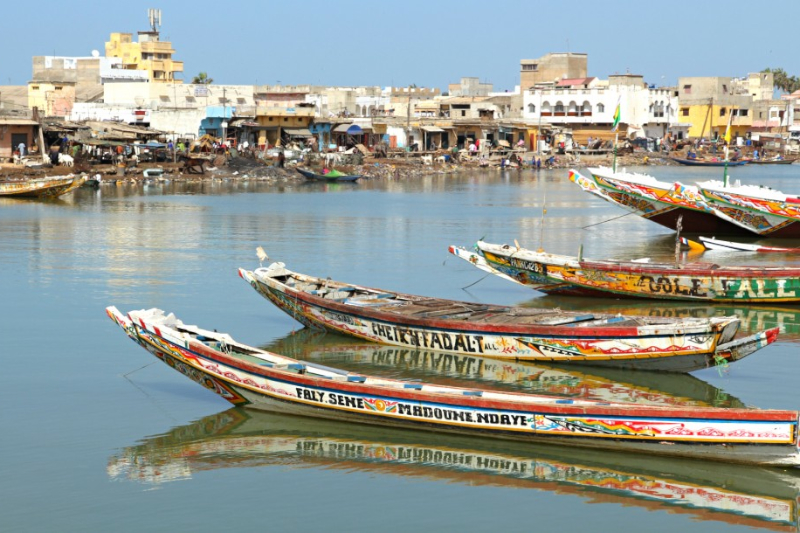
Backpackers travel to actively explore; this is very basic. And in West Africa, there’s no shortage of things to do. Riding the iron ore train in Mauritania, hiking the palm-laden playground of Guinea’s Djallon, and discovering a diamond mine in Sierra Leone were my personal favorites. Trekking Mali’s ornate Dogon Country, island-hopping in Senegal’s brightly lush Cassamance, or even canoeing and camping the Niger River are also popular choices. Navigating a rush hour in Lagos, bathing on Accra’s golden shores, trying to pronounce Ouagadougou, head-thumping rap shows in Freetown, summiting Guinea’s Mount Nimba, enjoying the refreshing sophistication–and trying to out-drink Ivorians–in Abidjan, and sending postcards from Timbuktu (OK–this one is probably not recommended at the current juncture) would also make for a nice afternoon. If you need to construct a list of activities to convince a skeptical parent, you won’t be hard-pressed. There’s plenty to see and do.
2. It’s Tough Not to Learn
West Africa has a fascinating history. From the Ashanti Gold Empire of what is now Ghana, to the birth of voodooism in what is now Benin, to endless kingdoms and sultans and religions and conflicts–to slavery, to war, to rise and defeat–West Africa has quite an illustrious past.
And then came the colonists. In the late 1800’s, European imperialists–mostly French, followed by English and Portuguese–sailed down to West Africa and began to set up shop. They pillaged communities, they looted resources, and above all, they claimed the land as their own. Finally, in the 1950’s, the colonists left, leaving behind the nations, most with newly formed borders, that we now see on the map. As you might imagine, they were left with many problems.
Every nation in West Africa carries the unequivocal label of a developing country. None boast basic infrastructures–paved roads, reliable electricity, clean water–for the masses. The entirety of West Africa is a large work-in-progress, and the issues aiding and impeding forward movement are in front of your face on an hourly basis. “Why are the Chinese building so many roads around here?” “Why is this country packed with diamonds, but its people are all still poor?” Why are the police officers harassing citizens for bribes?” “Why is everyone eating the exact same thing?!”
In West Africa, the underlying semantics of the government and economy alike are rarely buried under a veil of functionality: there are many problems, of which most citizens are actively aware, and as a backpacker, inquisitive or not, you will be educated daily. You will be invited to eat mangoes and chat government. You’ll be in a country’s east, hearing all day about why its locals can’t get along with the tribe in the west; days later, you’ll cross into the west, and hear the very same thing about those in the east . The learning process is rarely halted by familiar comforts either: you can’t just hang out in a Starbucks all day, browsing the WiFi and escaping it all. The issues of West Africa, even on a large travel budget, are inescapable. And when the electricity cuts off for the third time that day, as you are two hours into the monumental task of sending a single email, well, you just have no choice but to figure out just what the hell is going on.

3. It’s Really Just You
In 4 months I met 12 people backpacking in West Africa.Other travelers share similar statistics. There’s a few guidebooks for the area, but they aren’t very reliable. There’s hardly a beaten path, as there’s just no one to beat it in the first place. You won’t be sharing travel stories in your hostel bar, and you won’t be asking the information desk for a brochure. In many countries, locals quite literally don’t even understand what a tourist is.
In West Africa, it’s really just you. You make your own choices–you choose your own path. You figure out how to find places to stay, how to figure out what to do, how to trek to the next village and how to exchange your money. It’s just you dicing cassava with brilliantly dressed villagers, or sharing Fanta and acheke with your local imam. You’re in a strange place, and you are the stranger. It’s a grand and beautiful theme park of possibility, and your level of involvement and personal reward relies entirely on your own devices. It is the ultimate “solo travel” experience.
4. You Never Know What’s Next–Or What Isn’t
You arrive at la gare, where the bush taxis fill up, around 6:30am. Your car may fill by 7:00am, or it may fill by1:00pm. It may break down 10 times, or it may break down 20. Your driver may stop for lunch inexplicably, leaving 12 fiery passengers stuffed like jalapenos under a scorching red sun barking for his return. You may be invited to a wedding by strangers on the street, finding yourself in a glorious wonderland of food, liquor and color only a short hour later. You may be hiking, passing some villagers who are apprehensive about your presence, while the next refuse to stop feeding you oranges, bananas, rice, and fish until you literally beg their pardon.
In West Africa, more than anywhere else I’ve ever traveled, you really don’t know what the day will bring. A strong reason for this is the novelty of the culture, compounded by the fact that, once more, you are almost always the only backpacker in town. The locals want to help, befriend, educate, and involve. Be open, be as trusting as your good conscious allows, and your day will warp and twist to the good vibes of delightful possibility.
On the other hand, given that the Western notion of time is effectively non-existent, you really never know what won’t happen either. Just because your car leaves at noon, with only 100km of road ahead, there is no guarantee you will arrive before nightfall. In addition, just because you ordered your plate of rice and fish at4:00pm does not guarantee it will materialize before nightfall either.
In fact, the average day in West Africa is closely analogous with asking how long your bush taxi journey will take: “It depends on the road,” they’ll say. “I simply couldn’t give you a definitive answer.” And when you are spending your night sleeping outside on a cement veranda because the border is closed until morning, you’llknow, about bush taxi journeys and the day’s unpredictability alike, exactly what I mean.

5. It’s Very Safe, and You’re the Star
Apprehension about backpacking in Africa seems rather widespread, and when you’re in West Africa, with almost no other backpackers around, the proof is right there in front of you.
As a foreigner in West Africa, you’re the star. Everyone wants to talk to you and tell you about their country. Every mother seems to want to cook you food, while every child wants to give you a high-five. You ask for walking directions, and you’re offered a free motorbike ride instead. You ask a cafe owner what he’s cooking, and he offers the food that he’s currently eating, for free, instead. African hospitality is of a very special flavor, with the general gist being this: with seemingly everyone
The backpacker leaves home for a new experience, and in West Africa, he will find it. He’ll be fascinated by the culture, perplexed by it just the same, and ultimately, in a solar system of comfort very distant from his own. He will learn, he will discover, and his experience will not go as planned. This is West Africa–unequivocally differen
3 of the Best Beaches in Australia
Famed for its stunning beaches, Australia boasts over 4,000km of white sand and crystalline waters. Attracting over 580 million tourists in 2010 alone, Australia’s beaches rival those of Hawaii and the Seychelles. 90% of Australians live on the coast and consider their national pastime to be surfing, however, the thrilling sport isn’t the only activity popular along Australia’s coastline. Fishing, snorkeling rock pooling and even whale and dolphin spotting are all possible by simply going for a paddle.
Whilst, it’s not easy to choose the 3 best beaches in Australia with so many fantastic options, the following three have qualities that are perfect for families, those looking to top up their tan or enjoy exciting water activities such as surfing or snorkeling. If you are planning to visit Australia, you can check for Australia visa requirements online before hand to save you some time and headache.
Hayman Island, Great Barrier Reef, Queensland

For those looking to discover true idyllic, quiet, peaceful bliss need to look no further than the Hayman Island. Offering unsurpassed luxury and a multitude of activities including kayaking, water skiing, wakeboarding and even helicopter tours of the Great Barrier Reef. Dripping with astonishing natural beauty, the reef can be enjoyed either by sea or air and guests can also snorkel or dive at the reef with the Hayman Diving and Snorkeling Center which will provide guidance and expertise to those who need it. A trip to the Hayman Island in the Great Barrier Reef is an unforgettable experience.
Horrocks Beach, Western Australia
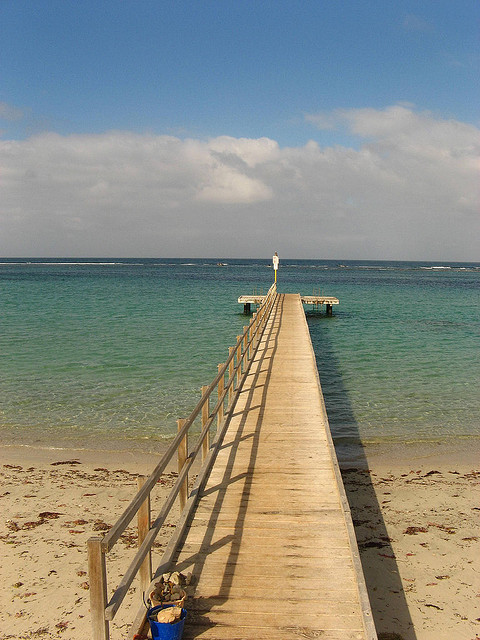
The picturesque seaside town of Horrocks has much to offer the humble traveler looking to enjoy hot weather, white sandy beaches and warm waters. Surrounded by a coral reef, the bay is perfect for snorkeling and bathers can splash around to their hearts content. During late spring (around October) bathers may even be able to spot humpback whales on their migration south. When the tide is out, bathers can go rock pooling and investigate the diverse marine wildlife that calls the reef it’s home. A great family beach, Horrocks also features a nearby adventure playground for when adults want some peace and quiet.
Mandalay Beach, Western Australia
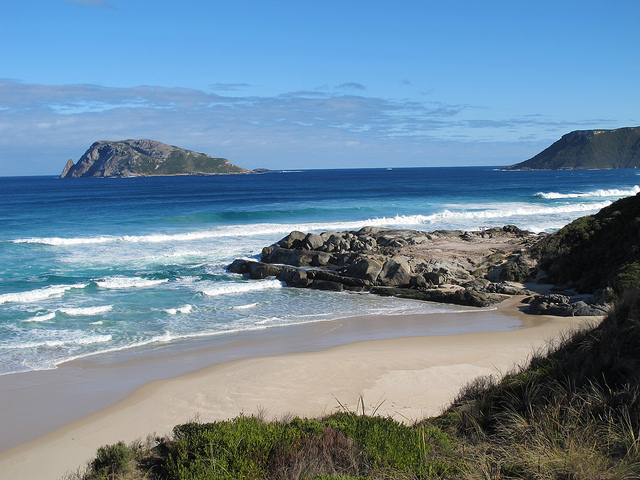
Perfect for sun, sand and surf, Mandalay beach was given its name from a Norwegian ship wrecked there in 1911. Offering spectacular views of Chatham Island, the incredible coastline of Mandalay is perfect for a family day out or a great stop off point for hikers traveling the Bibbulmun track that spans from Kalamunda in the Perth hills to Albany along the south coast. Mandalay beach is popular with both anglers and surfers. It’s also part of the D’Entrecasteaux National Park.
Beautiful, bright Bodrum, Turkey!
I’ve been going to Turkey for the last seven years, and I’ve watched it change as tourism has become big business over recent years. The number of visitors to this wonderful, mysterious country has increased dramatically, and Bodrum is one of those booming resorts.
Fantastic beaches, lively night-life, delicious restaurants, history, culture, and lots of shopping, all with the potential to explore further afield – it’s no wonder Bodrum is so popular.
There are some fantastic package holidays to Bodrum this summer, ranging from all-inclusive, half-board, full-board and self-catering. Personally, I tend to book self-catering, as there are some wonderful restaurants around and I enjoy the freedom to go where I please in the evening, however if you’re travelling with children, I’d recommend all-inclusive, to keep costs on holiday low.
Getting to the airport itself can be a hassle, and you’ll find that many flights to Turkey are at awkward times of the day from the UK. A great way to save money and combat stress is to pre-book Airport parking at your terminal, meaning no need to book an expensive airport taxi, and putting the control firmly back in your hands. You’ll find a service no matter where you fly from, and I recently used Stansted Airport parking at Airparks, with no complaints from me whatsoever! I’d highly recommend you look into what’s available from your airport.
Once you land at Bodrum Airport, it’s under an hour’s transfer to your hotel, depending on where you’re staying. It’s easy to get around resort, thanks to the handy dolmus, or mini-bus, running around resort, but Bodrum is quite compact, so I’d suggest a pair of comfortable flip flops and head out on foot and explore. The dolmus is invaluable for exploring the surrounding area, such as the nearby resort of Gumbet, with its wide beach and plentiful water-sports. Alternatively, haggle the price of your excursions from a street vendor and head out on a jeep safari into the surrounding countryside, through villages and hills. A boat trip is also a must-do excursion, as well as a traditional Turkish bath for that longer lasting tan.
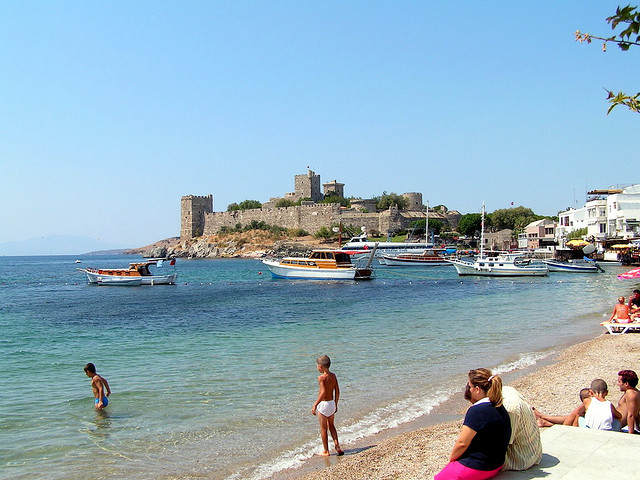
In Bodrum itself, the castle should be your first port of call, stood imposing over the town. It also hosts the popular Museum of Underwater Archaeology, which is a surprisingly interesting morning or afternoon’s entertainment, and one the kids will love too.
For retail therapy hits, the marina has the best in terms of designer buys, however I love the markets for unusual souvenirs, and the haggling is fun once you get used to it.
As with most Turkish resorts, night-life is bright, vibrant and lively, yet also very varied. If you want to party, you’ll find plenty of clubs and bars, especially down on the water-front, yet if you just want a good meal and a few drinks, you’re more than catered for too. I’d really recommend trying some traditional Turkish cuisine, such as tasty chicken shish kebab, followed by some naughty-but-nice kunefe, and a glass of raki. Turkish food is cheap, plentiful and certainly delicious!
For a sunshine break with an added difference, Bodrum is a fantastic choice. Remember those airport extras and your holiday will not only be cheaper, but will start in a much more rested manner, without the stress of the airport marring the start of your break. You’re not forgotten in the parking stakes no matter you fly from, with services such as Luton Airport parking fantastic value for money.
Sunshine is a given, a great holiday is guaranteed – head to Bodrum this summer.
This was a guest post from Michelle Camens
What Exactly are Airline Mile Credit Cards?
What are airline miles credit cards and how do they work?

Since their arrival in September 1958, credit cards today have a widespread reach and acceptance. They have eased the process of making payments by negating the need for carrying cash. Further, their popularity has fueled the aspirations of the online shopping culture. So it comes as no surprise that banks vie with each other for acquiring more customers. In order to achieve this, they offer rewards like cashback rewards, points or airline miles.
Airline mile credit cards are a type of travel credit cards. They enable cardholders to earn airline miles each time they use the card. Travelling has become increasingly expensive; paying hard-earned money for flights, at hotels and then for other purchases when holidaying, can be hard to digest. Recognizing this need, credit card issuers quickly created the airline miles credit card.
These cards offered airline miles in lieu of each pound spent using the card. As the miles accumulate, so do the benefits. Hence, once you have a sizeable number of airline miles in your account, you can enjoy several benefits. These could include free flights to and from several destinations, free accommodation at top tier hotels and other perks.
There are two types of airline miles credit cards:
- Airline associated cards: These cards have an affiliation to a specific airline. You can earn airline miles each time you use the card and whenever you choose to fly on the affiliated airline. These cards are worth it if you use the affiliated airline frequently as you can generally earn double points for each ticket you book on this particular airline.
- General air miles cards: These cards enable you to earn airline miles for each purchase. Further, you can redeem the airline miles towards purchasing tickets for any flight you wish. If you do not have loyalty towards any specific airline group, this card is useful for the flexibility it offers.
How airline mile credit cards work
You can use airline mile credit cards in the same way as you use other credit cards. The sole point of difference lies in the way you accumulate benefits. Thus, instead of accumulating reward points, you will accumulate airline miles. When you have a sizable number of airline miles, you can redeem them for free flights and other benefits.
A point to remember with airline mile credit cards is the return you get on your investments. Most credit cards will offer you one airline mile for each pound spent. Therefore, look for cards that offer you more than this 1:1 ratio. It will help you accumulate points faster. Also, opt for credit cards that give you airline miles for every category of purchase i.e. groceries, petrol refills etc. This way, each time you use the card to pay for something, you can add to your balance of accumulated airline miles.
Some airline mile credit cards provide several thousand welcome miles when you activate your account. This means that you do not begin your account with zero airline miles. Instead, you could earn 3,000 – 25,000 airline miles within the first three months of opening your account. Most credit card issuers will place some conditions before they give you these bonus airline miles. The most common conditions entail:
- Spending a threshold amount within the first three months of opening the account
- Making your first purchase within the first three months of opening the account
Situations and people these cards are tailor-made for
For people who travel several times a year – on business or pleasure – having an airline miles credit card can be very useful. Depending on your spending capacity, you may or may not earn enough airline miles to get a free flight each year. However, this card could bring that free flight closer to you.
Airline mile credit cards suit people who love travelling. They also provide useful benefits for those individuals who travel for business reasons. For example, consider an individual who flies for business reasons several times a year. This individual can easily afford to pay for a holiday with the discounts earned from each business trip. Similarly, people bitten by the wanderlust bug can earn airline miles with each purchase they make. This would help them accumulate airline miles, which they can use for travelling to exotic locations. The alternative is to keep an eye out for special deals on flights from discounted or voucher sites like Groupon!
Benefits of airline mile credit cards
- Airline mile credit cards provide several benefits for those who love travelling. These include:
- A faster rate of earning airline miles with generous sign-up bonus miles etc.
- The ability to earn rewards on each purchase
- Access to a variety of benefits like travel insurance, free check-ins and free upgrades
- Discounts on air tickets, accommodation expenses etc.
Drawbacks of airline mile credit cards
- In certain situations, airline mile credit cards can be disadvantageous too. Some of the shortcomings of these cards include:
- While you can earn airline miles at a rapid rate, these hard-earned miles could expire quickly too
- These cards have high Annual Percentage Rates (APRs) as compared to other cards, hence you could end up paying a significant amount of interest if you keep balances on these cards
- It could take a long time before you earn sufficient points to redeem for a free flight if you do not use the card often
- Airline mile programs sometimes have some restrictions on dates and routes
How do airline mile credit cards compare with other credit cards?
Cashback credit cards generally provide better returns per pound spent than airline mile credit cards. The average cashback card offers you £30 if you spend £250 per month. This gives you a return ratio of 12p per pound spent. Airline mile credit cards offer you one mile per pound. However, for a free round trip to Rome, you would need 15,000 airline miles. Thus, you would have spent £15,000 pounds. However, if the same flight costs you about £300 through a usual booking, you are getting a return of 2p per pound spent.
Further, cashback and reward cards provide faster benefits as you do not need to wait for years to redeem them. Rewards on these cards will seldom expire or have any restrictions on them, unlike flight reservations. It could be likely that by the time you have sufficient airline miles stacked up, it could cost you more airline miles for a free flight. Cashback and reward cards also give you greater flexibility when redeeming your rewards. Most cashback and reward cards do not have any annual fee either. Airline mile cards offer huge sign-up bonuses unlike cashback and reward cards.
If you want to compare airline mile credit cards and their associated benefits with other types of credit cards, visit www.comparethemarket.com/credit-cards.
How rewarding are airline mile credit cards?
Most airline mile credit cards offer one airline mile per pound spent. Certain airlines even offer 1.5 – 3 airline miles if you spend it directly on the airline associated with the credit card. The massive sign-up bonuses offered ensure that you hit the ground running, as far as accumulating airline miles is concerned. Each airline mile credit card has its own requirement when it comes to earning a free flight. Some airlines offer return flights to Berlin for 9,000 miles; Rome for 15,000 miles and Moscow for 20,000 miles.
- Depending on the credit card issuer, you could even gain other benefits like:
- A complimentary companion voucher based on spending a specific amount annually
- Introductory offers on balance transfers
- Travel insurance
- Supplementary cards for your family
- Upgrades and automatically enrolling standbys on waitlisted tickets
- 24/7 assistance outside the UK
- Refund and purchase protection programs valid for 90 days from the date of purchase
- Complimentary invites to various entertainment programs
Noted French poet, Jean de La Fontaine, said, “We always take credit for the good and attribute the bad to fortune”. Credit cards came into being more than a hundred years after his lifetime. However, his words provide sound advice when it comes to selecting a credit card. Reading the fine-print carefully and doing the mathematics on the returns on investments, remains the best way of finding a credit card.


 Welcome to Home Town Travel Guides.com , your source for travel guides written by locals and those who've been there and done that! ~Jeremy