
Author Archives: Jeremy Albelda
Top Tourist Attractions In Portugal
The top tourist attractions in Portugal are unique to the country even though it shares the Iberian Peninsula with Spain. It owes its unique identity to its geographical and cultural separation from its Spanish speaking neighbor. While Portugal might not be the richest country in Western Europe, it has is a rich land with lively cities and plenty of attractions to see an enjoy.
1. Cristo Rei
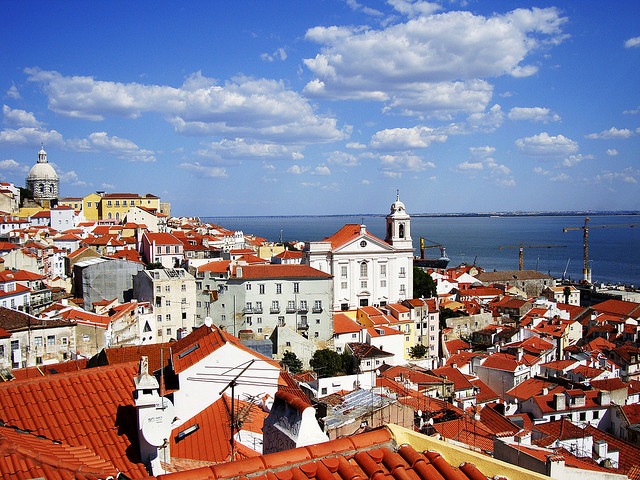
This Christ the King statue is the country’s most iconic landmark. The Portuguese had it built to give thanks because their country was spared from harm in the second World War. Cristo Rei resembles the world-renowned Christ the Redeemer Statue in Brazil. Situated in Lisbon, Portugal’s capital and largest city. It hasn’t moved an inch since its completion in 1969.
2. National Museum of Ancient Art
The museum of Ancient Art has the most expansive collection of Portuguese art from before the 19th century. Like Cristo Rei, you can find it in Lisbon. Included in its displays are a variety of artworks including sculptures, drawings, and paintings. The oldest collections in the National Museum of Ancient Art are from the Middle Ages. Works of famous artists such as Cristovao de Figueiredo, Francisco de Holanda, and Garcia Fernandes are part of the impressive exhibits.
3. Algarve
The Algarve is a region located in the most southern part of the country and is home to some of the most amazing beaches Portugal has to offer. The Algarve is one of the top tourist attractions in Portugal with more than 10 million tourists coming to visit every year, with a high percentage of British notably escaping the winters back at home. There are many beautiful coastal towns to choose the perfect accommodation and you can stay in everything from hostels to 5-star hotels. For a unique experience, check out Villa Plus, they’ve got a large list of amazing villas to enjoy with your better half or the entire family.
4. Monsanto Forest Park
Home to pleasant countryside, there is no better place to see natural beauty than in Monsanto Forest Park. It has more greenery than anywhere else in Portugal. The area contained by the park used to suffer from reduced wildlife until the government deemed it a protected area. Today, it has an ecological park, a thriving flora, and a recovering population of animals.
5. Berardo Collection Museum
The Berardo Collection Museum opened its doors to the public in 2007 in Lisbon. Unlike the National Museum of Ancient Art, it displays modern artwork. There are more than a thousand individual pieces currently on display. And with more than 2.6 million tourists visiting every year, Berardo Collection is one of the world’s most visited museums.
Works by famous artists like Pablo Picaso, Jackson Pollack, Salvador Dali, and Andy Warhol are part of its exhibits. Berardo Collection Museum is definitely one of the top tourist attractions in Portugal not to miss if you’re an art lover.
Best Time To Visit The United Arab Emirates
The best time to visit The United Arab Emirates is not as easy as, “go when it’s cooler!” The best time to visit is based more on geography and the Muslim calendar. One must understand certain practical characteristics of this country. First of all, The United Arab Emirates is pretty much a desert nation and this unique biosphere could very much affect when travelers generally visit. Also, The United Arab Emirates is a Muslim country and there are certain special dates in the calendar that are subject to strict religious events. Knowing a bit about the country could add insight into your decision in when to plan a holiday to The United Arab Emirates. Most importantly, visitors should know their preferences better. Some travelers have upbeat and light-hearted personalities that prefer congestion and activity, while others prefer solace and privacy – all of which can be had in the UAE. Here are some tips for when to choose to visit the United Arab Emirates!
1. October to May daytime temperature
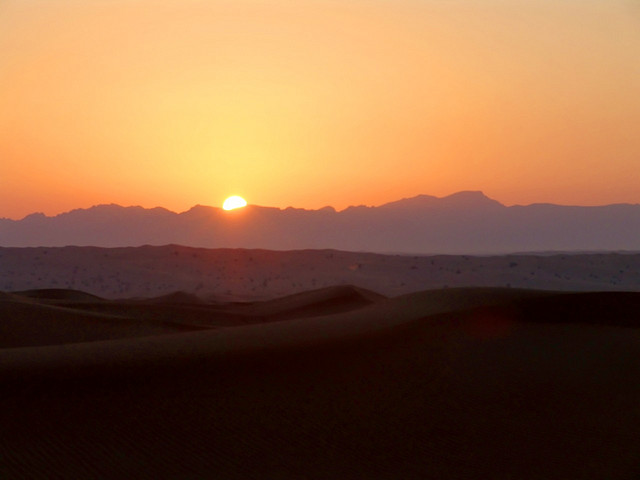
The best time to visit The United Arab Emirates generally falls between the months of October to May. It is during these months that the day time hours are quite enjoyable. Morning and middays have clear blue skies streaked with stratus clouds. Evenings are also quite warm, unlike winter season that temperatures can hover just above freezing. While the months of October to May are an ideal traveling time, the months of June to September are best avoided. July and August daytime temperatures can get dangerously hot and you’ll find many locals and tourists alike inside in the daylight hours. A popular daytime activity when it’s hot is heading to the mall and there are no shortage of spectacular ones in the UAE like Mall of the Emirates. Many hotels surround the malls for easy access like the specatular Kempinski’s Hotel – Mall of the Emirates.
2. Vibrant February festivities and events
February is also a great time to visit The United Arab Emirates because this month has four important events. One can join the Abu Dhabi Film festival and view the country’s local movie productions. Dubai Desert Classic is a special golf event that appeals greatly to golf enthusiasts from all over the world. Other wonderful events are the Al Ain Air Show and the Al Ain Classical Music Festival. The latter event suits best the fans of Beethoven and Voltaire.
3. Great shows around the month of December
December is another month that is busy with special national events. Film enthusiasts could attend the Dubai Film Festival and check out how the Arabian movie-making industry works. December is also a month dedicated to various exciting sporting events. The Dubai International Rugby Sevens serve the enthusiasm of those who enjoy the “sport of ruffians played by gentlemen”. Boat racing events are also popular including the UIM Formula One Power Boat Championships and UIM Class One Power Boat Championships.
4. Keeping Ramadan sacred among Muslims
As mentioned earlier, The United Arab Emirates is an Islamic country. One should know that Muslims have a very distinct treatment of their own religion. There is no such thing as a category that separate the devout and secular. One should expect the sacred Ramadan month to be sacred for all. There are many restrictions of liberties during this month (especially concerning clothing preference and alcohol intake). Scholarly travelers could take this opportunity to learn more about the often misunderstood Islamic culture.
Gorgeous Grande-Terre: Must Do’s for Every Day-tripper
Grande-Terre Island is the name given to the eastern half of Guadeloupe Island (with the other half known as Basse-Terre). It is the home of most of Guadeloupe’s tourist resorts and farmlands, due to its beautiful land and coastline. If you you’re only visiting Grande-Terre Island for a day trip however, what attractions can you see to keep busy?

Aquarium de la Guadeloupe
For people that want to spend the day relaxing and enjoying marine life, Aquarium de la Guadeloupe is an excellent choice. With its variety of marine life, visitors can enjoy seeing everything from crabs to sharks. Daily snorkelling tours are also available, so visitors can experience the beauty of marine life first-hand, with a biologist and diving instructor.
Ft. Fleur D’épee
If you want to take full advantage of all inclusive long haul holidays, visiting the fortress in Bas-du-Fort is a must. Built between 1759 and 1763, the fortress can be found on the hillside behind a deep moat. The fortress is well-known for its battles between the French and English in 1794, and visitors can learn everything they need to about the battles and fortress history through guided tours.
Musée Camelia Costumes et Traditions
If you want to see a true labour of love, you must take the time to visit the Musée Camelia Costumes et Traditions. The private collection, owned by a retired English teacher named Camelia Bausivoir, includes examples of the dress of different societies through the ages. You can see baptism outfits, madras headdresses, colonial pith helmets, and much more.
Cathédrale de St-Pierre et St-Paul
For tourists that enjoy visiting religious sites, Cathédrale de St-Pierre et St-Paul is a must. Built in 1807, the cathedral has Creole-style balconies and stained windows that give it a dramatic effect. Since it was battered by hurricanes, it is under renovation and supported by ribs and pillars.
Musée St-John Perse
If you have a strong love for French culture and literature, visiting the Musée St-John Perse is sure to please. The museum is dedicated to Alexis Léger (better known as Saint-John Perse), a famous poet. In fact, in 1960, he won the Nobel Prize for literature. Most of his best work was inspired by his love for Guadeloupe.
Le Gosier
Le Gosier is a popular place for many tourists due to its shops, nightclubs, rental car agencies, and its casino. Although it simply used to serve as a stopping place between Pointe-à-Pitre and Ste-Anne, it is now one of the most popular tourist attractions.
St-François
Aside from Gosier, St-François is another area fast growing in popularity with tourists. In fact, it is believed that St-François is quickly overtaking Gosier as being the most fashionable and luxurious resort area. The area includes hotels, restaurants, bars, shops, golfing, and a casino.
With so much to see and do in Grande-Terre, any tourist can enjoy a wonderful day trip.
Alex Norman loves living under the stars. An avid traveller, he loves to write about a variety of topics that revolve around the great outdoors.
The Maldives: what to expect in terms of culture
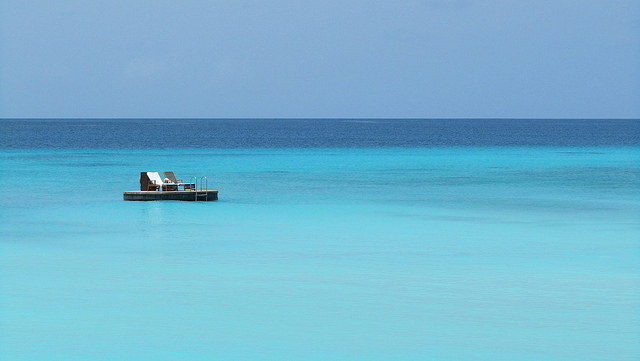
Postcard-perfect beaches, balmy weather, lush greenery – the Maldives is an archipelago that virtually everyone wants to visit. And that’s very conservative on my part, I think; I mean, if money was no object, who wouldn’t come here? Most of the time, all you hear about is its beaches and luxury hotels; its diverse culture, meanwhile, is rarely mentioned.
Today is the day that changes, however, as culture is going to be the focus of this post. If what you read inspires you and you decide to sort out the practical details of your holiday right away, such as finding a hotel, just do a Google search for the Maldives and plenty of info will pop up.
A glance at history
Any destination’s culture is largely shaped by its history, so when I tell you that the Maldives has a fascinating past under the rule of a number of countries and suffused in myth, you should recognise that now is the time to get excited.
The first thing to know is that the islands of the Maldives dot the trading route of the Indian Ocean – something that has meant that visitors from far and wide having been coming here both in the form of short stops and of settling for centuries on end. So, the country is no stranger to overseas influences, which have made their impact on the culture over the years.
Just to give you an idea of what influences are at play, the original settlers here belonged to the Buddhist faith, but the nation converted to Islam back in 1153. In 1558 the Portuguese invaded, before being forced out in 1573. The archipelago then became a protectorate of Great Britain in 1887, gaining independence in 1965. In 1972, the first-ever island resort was built – a real landmark when you think how important local tourism is now.
Language, arts and more
So, you now have a (very) broad outline of the Maldives’ history, which means it’s time to look more directly at what you’ll experience in terms of culture. We’ll begin by taking a quick look at things like language, which you’ll come into contact with as soon as you arrive.
The national tongue is Dhivehi, but you’ll find the dialect can vary depending on whereabouts you are. For instance, on the inhabited islands in the far south you’ll notice a distinctly different dialect from places like Male’ – something that’s often attributed to the former’s relative isolation.
If you go island hopping, expect to discern differences in people’s appearances from one atoll to the next. This is down to the Maldives’ trade route location, which saw peoples from places like Africa, Arabia and south Asia settle here.
So, it’s easy to see the country is something of a melting pot. What I like doing is exploring the local arts and picking out different slices of heritage – as well as seeing how these diverse elements come together to create something new.
For instance, head into a mosque and you’re likely to see intricate patterns on the wooden beams, which can be traced back to south-east Asian influences. In terms of music, keep your eyes (and ears!) peeled for the bodu-beru, which is like an African drum.
Go island hopping, meanwhile, and you’re likely to do so in a dhoni – a traditional Maldivian boat. Look closely, though, and you’ll see it looks very similar to an Arabian dhow.


 Welcome to Home Town Travel Guides.com , your source for travel guides written by locals and those who've been there and done that! ~Jeremy